FEATURES
Designed around how SPS actually fail
A spreadsheet captures numbers. STN and RTN are a time × chemistry × environment problem — and you need to see them intersect. Acro is built around that intersection.
FRAG IDENTITY
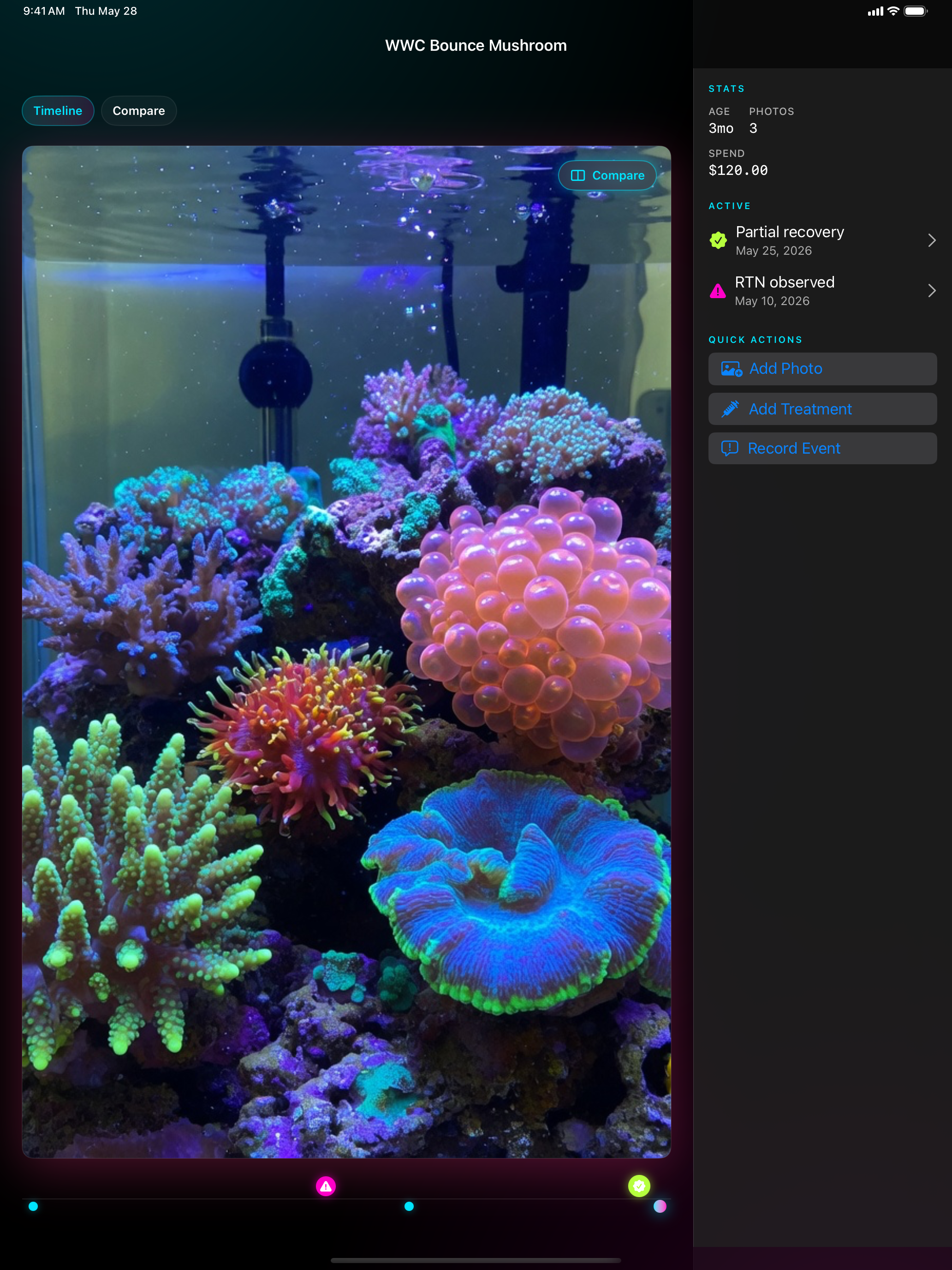
Each coral is its own file
Not "I have 8 Bounce" — but "this Bounce, acquired 2024-12-04 from JF Corals, with these photos and this history." When something goes wrong, you know which one.
- Baseline photo on creation, follow-up shots over time
- Compare slider — same coral, two dates, side-by-side
- Tissue events (positive or negative) attached to the timeline
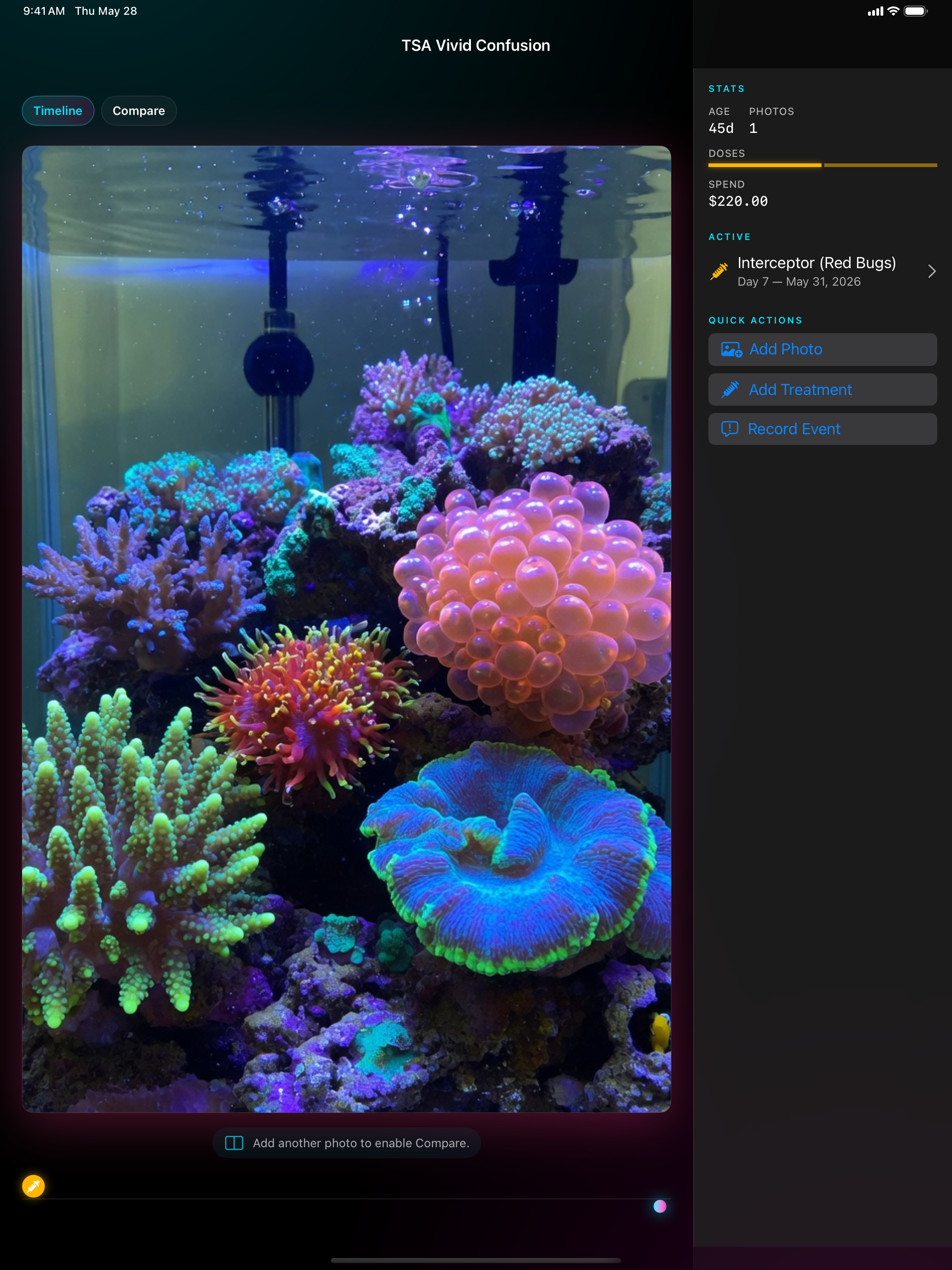
- Per-coral treatment history with dose-progress pips
WATER ANALYTICS
Water as a story, not a snapshot
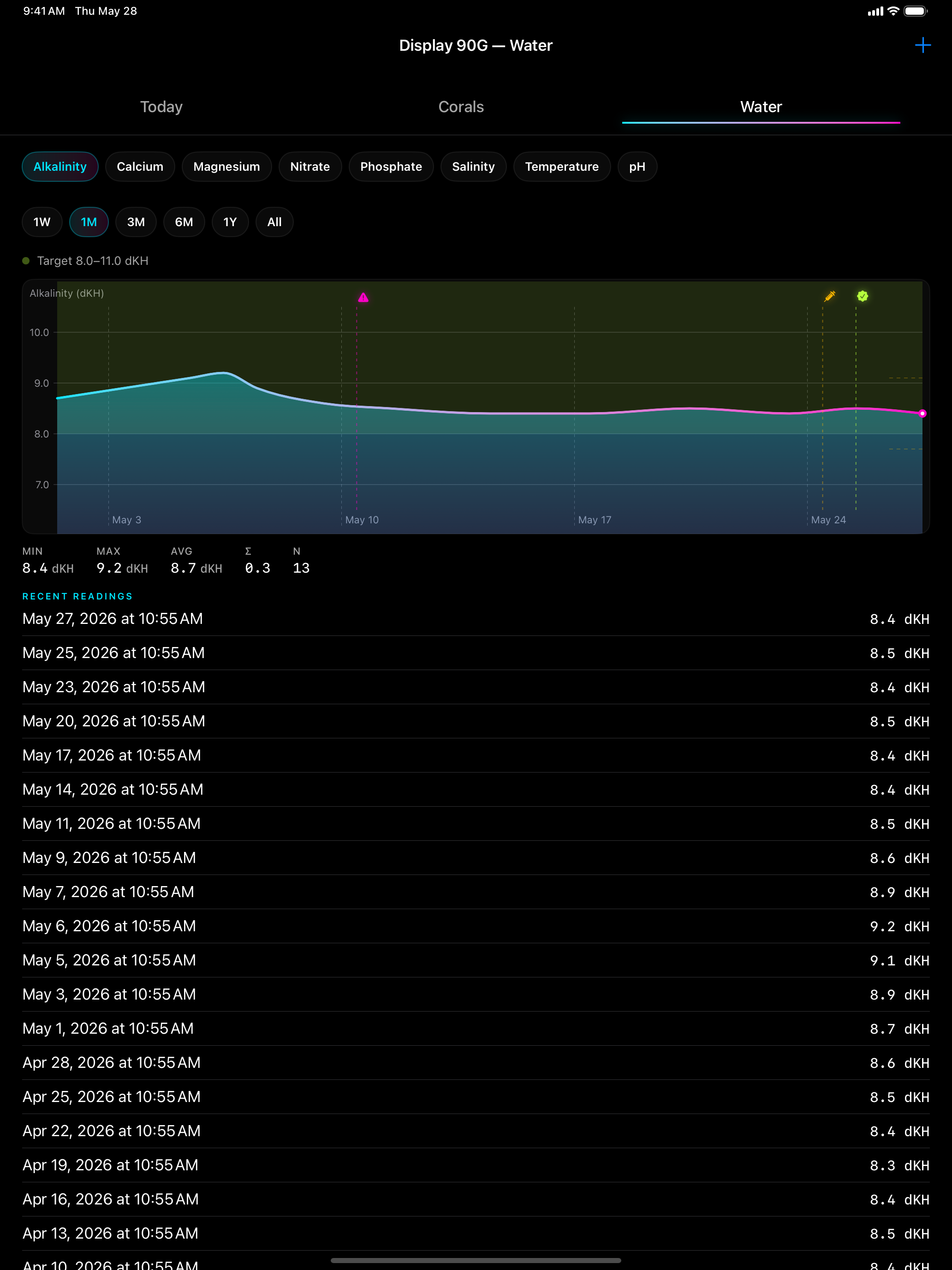
Every reading is a point on a line. The chart pulls in your target healthy band, your last-24h swing tolerance, and any treatments or events on the same axis — so you can see when something changed and what changed around it.
- 1W / 1M / 3M / 6M / 1Y / All range pills
- Target band (lime) and last-24h swing band (amber) overlaid
- Treatment + tissue-event markers on the same timeline
- Display units switch between °F/°C and ppt/SG without re-storing data
TREATMENTS
Treatments with receipts
Built-in protocols for common hobbyist treatments — fluconazole for dinos, Coral Rx dips, levamisole for flatworms — each with default dosage and duration you can override. Then the app tracks which doses you actually did.
- Dose-progress pips: "6 days completed, 1 left"
- Today screen surfaces "Treatment X has a dose due"
- Treatment markers show up on the water chart so you can see the chemistry response
Hobbyist references, not veterinary advice. Verify dosages against product labels. See the full disclaimer.
TISSUE EVENTS
STN, RTN, and recovery — on the record
Mark when a coral starts losing tissue, when it bleaches, when it recovers. Each event affects the tank's Pulse score and shows up on the chart so you can correlate it with chemistry swings or treatment timing.
- Positive and negative event types
- 30-day event count badges on the coral grid
- Cross-reference with water history for root-cause analysis
PRICING
Buy once. No subscription.
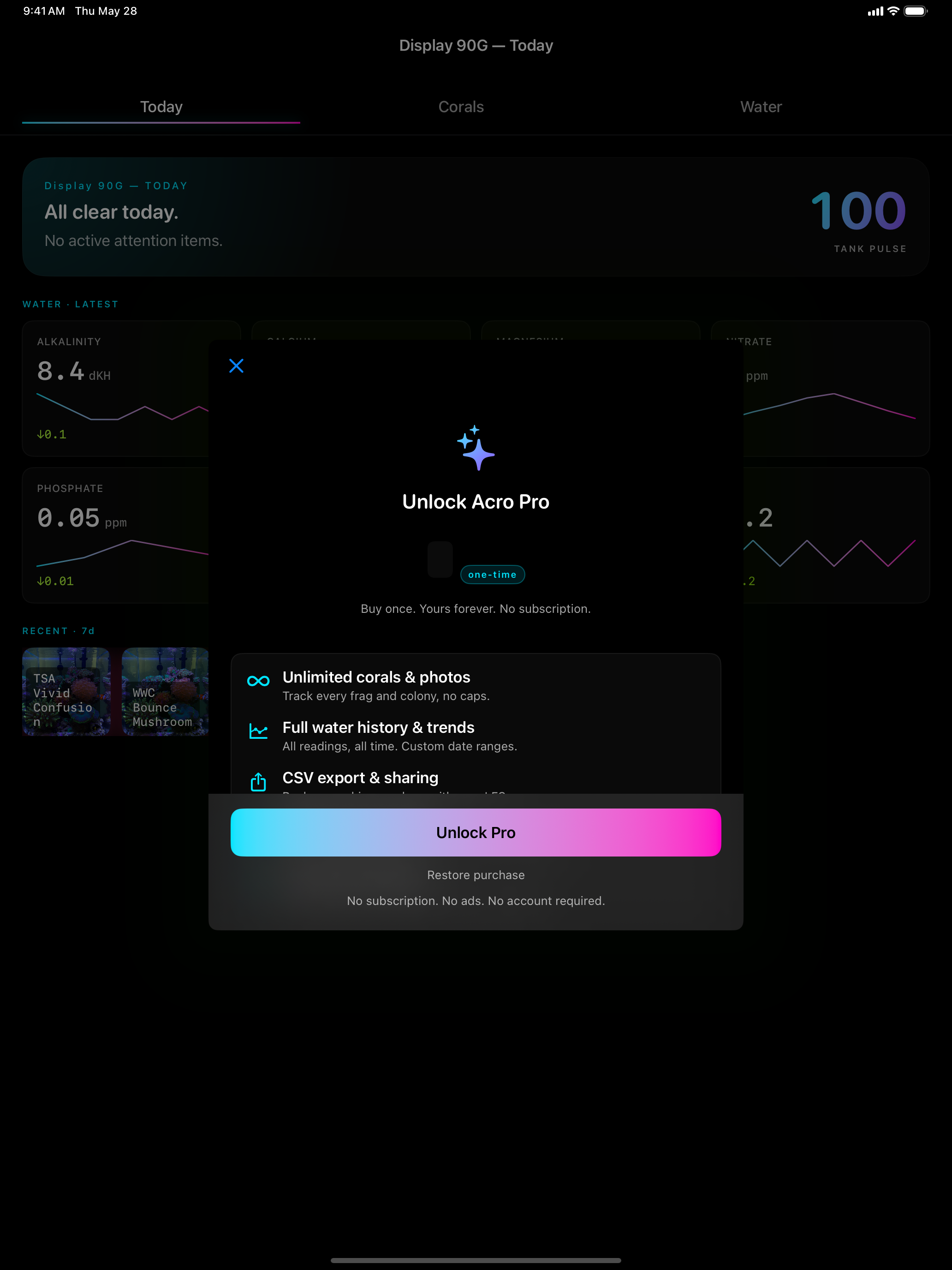
Free to start — 2 corals, 30 days of water history, 3 photos per coral, and unlimited treatment logging. One-time US$5.99 unlocks every limit, with no recurring charge and no cloud account. Existing users from earlier builds are grandfathered to Pro automatically.
- Unlimited corals and photos
- Full water history with custom date ranges
- CSV export and sharing
- Advanced reminders for water tests and dosing
- Custom water parameters (track anything you measure)
Why one-time? Reef tank trackers don't need a server bill behind them. Your data lives on your device — there's nothing for us to charge you monthly to host.
DESIGN
Built dark, built fast
For night tank-checks
The Aurora visual system is dark by default — most reefkeepers check chemistry at 7pm under blue actinics, not at noon under fluorescents. Every screen reads at low brightness.
On-device, no telemetry
SwiftData + SwiftUI. Photos in the app sandbox. No accounts, no analytics, no server contact. Privacy policy.
Ready to track your reef?
iPad & iPhone · iOS 17+ · Free with optional Pro upgrade
Download on the App Store